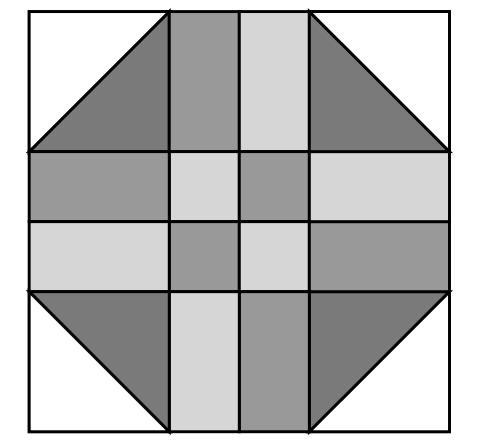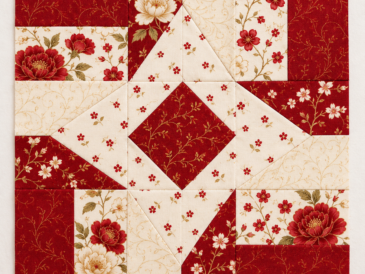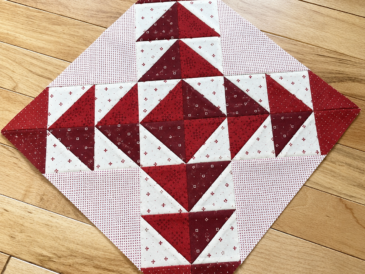
A spring garden is a good place to borrow a quilt palette. Look closely at a bed of pink tulips and you’ll find more than pink and green. There’s cream along the edge of a petal, deep plum where two leaves cast a shadow, and perhaps a little yellow just beginning to show. The Spring Walk block pattern is a lovely occasion to bring a few of those details into your sewing room. You’ll find the complete pattern in the PDF at the end of this article.
Start with one print you would happily use down to the last scrap. A little rosebud sprig, a blue calico, or a wildflower print can all give you a starting point. Pull two colors from that fabric, including one of the quieter shades. A cream print scattered with coral flowers and tiny olive stems, for example, pairs beautifully with dusty coral cotton and a deeper olive blender. Even a small amount of the olive helps the stems in the original print stand out.
Before cutting, place your ruler over the print and use slips of paper to frame a window the size of one of the finished pieces shown in the PDF. Move the window around. One spot might frame a whole blossom, while another catches only the gap between flowers. This little preview is especially helpful if you’ve fallen for a large-scale print and want to decide where it will look best.
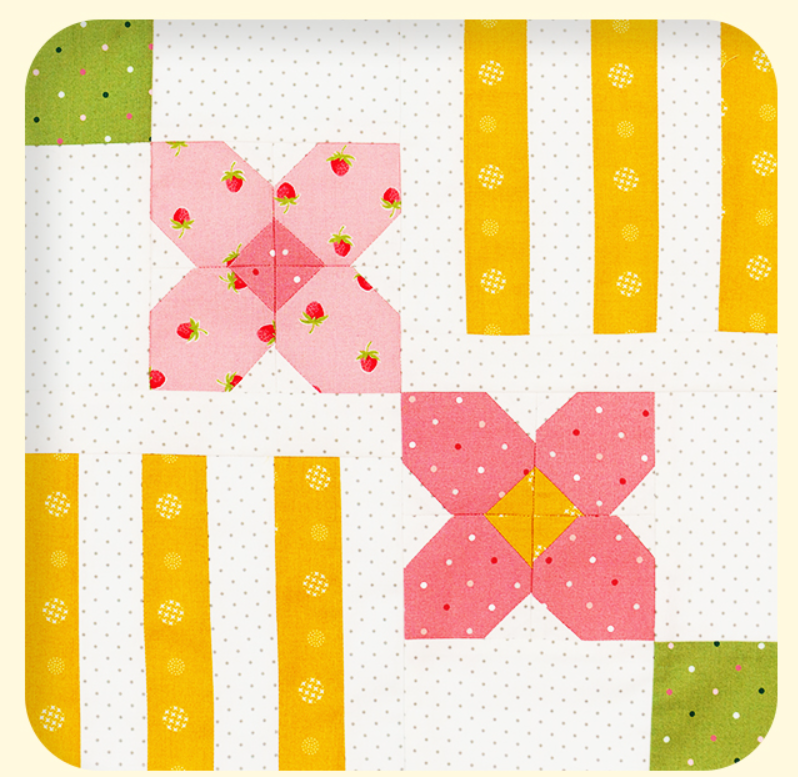
If your Spring Walk block will be part of a sampler quilt, lay it beside two or three blocks you’ve already sewn. Look for a color you could carry from one block to the next. A scrap of blue gingham from an earlier block, tucked among the spring florals, can make the two feel like they belong in the same quilt. You may need only a few inches of a fabric you thought you’d used up.
Give Soft Colors Enough Contrast
Pale fabrics can look quite distinct on the cutting table and almost identical once they’re sewn into small pieces. If you’re planning a pastel Spring Walk block, lay your fabrics edge to edge in the order they’ll touch in the pattern. Then step back a few feet. If a seam you want to emphasize seems to disappear, try changing just one fabric. In a butter-yellow and sage palette, for instance, a deeper fern green may be all you need.
The background deserves the same attention as the focal print. Try placing your fabrics on warm ivory, then on crisp white. Ivory can bring out the warmth in peach and old-fashioned rose prints, while white can make cornflower blue feel especially fresh. Choose the combination you like in the daylight where the finished piece will be displayed.
Piece Your First Spring Walk Block
Read through the PDF before cutting, especially if you plan to make several blocks. Cut the pieces for one block first and arrange them beside your machine in the order shown in the diagram. If your fabric has a directional print, take a quick photo of the layout. It gives you an easy reference when you pick up a piece and suddenly wonder which way those little stems were pointing.
Once the first block is sewn, press it and compare it with the pattern’s unfinished block measurement. The unfinished size includes the seam allowance around the outside, so it’s the measurement to use before joining the block to anything else. Checking at this stage gives you a chance to adjust your seam allowance before cutting into the rest of a favorite fabric.
Make a Small Spring Project
A single Spring Walk block can become the front of a cushion. If you’d like it to fit a particular insert, measure the pieced block first, then work out how much width to add with borders, allowing for the seams. A narrow border in the same color as the background gives the patchwork a little breathing room. For the back, consider using the floral that inspired your palette. It’s a lovely place to enjoy the full print, especially if only small glimpses appear on the front.
For a table runner, try making three blocks with the same background and a different flower color in each one. Lay them out on the table before joining them. You might like a gentle progression from blush to coral to rose, or find that the deepest shade looks best in the middle. Seeing the blocks where you’ll actually use them makes that decision much easier.
Download the Spring Walk Block Pattern PDF
Ready to sew your own Spring Walk block? Choose a favorite print, gather a few coordinating scraps, and download the complete pattern below to get started.
When working with a pale background, turn the pieced block over before adding the batting. A loose navy or green thread can show through ivory cotton, especially once the layers are quilted together. Hold the block up to a window, snip any stray threads, and check that the darker seam allowances lie neatly behind the colored patches. It’s a small job that’s much easier while the back is still within reach.
Download the Spring Walk Block Pattern PDF
For the quilting itself, take a cue from your favorite fabric. If the print has slender leaves, try sketching a loose line of paired leaves on paper and stitching a sample on a scrap sandwich. Use the same batting and thread you plan to use in the finished piece. Turn the sample in the light to see how the stitching looks across both the floral and the background before choosing your design.
To choose a binding, fold a few fabric strips to the width that will show on the finished edge. Lay each one along two adjoining sides of the quilted piece so you can see how it frames a corner. A narrow green stripe can pick up the stems in a floral print, while a binding cut from the background fabric lets the patchwork carry right to the edge. That little folded preview gives a much better sense of the finish than a whole yard of fabric spread across the table.