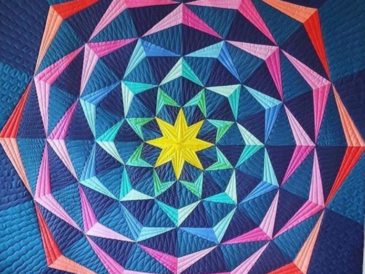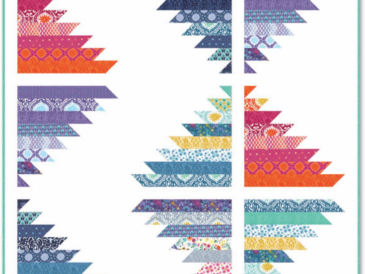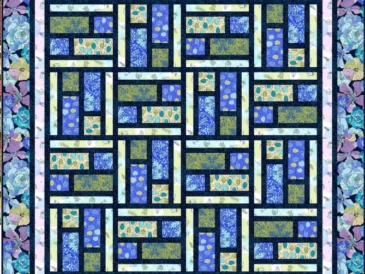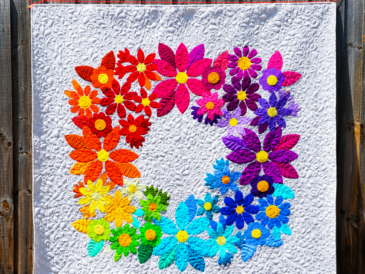
Every quilt begins with a choice: a fabric you cannot resist, a color combination that catches your eye, or a design you want to make your own. Exploring a Moda quilt pattern can be a wonderful way to turn that first spark of inspiration into a finished quilt for your home or someone special.
Moda publishes a variety of free quilt patterns, so the name refers to a range of projects rather than one specific block or layout. The pattern you choose and the fabrics you pair with it determine the character of your finished quilt.
This guide shares practical ideas for selecting fabrics, organizing your supplies, and approaching your project with confidence. You will find the free pattern PDF near the end of this article, just before the conclusion. Refer to that download for the exact measurements, fabric quantities, and construction instructions for the featured project.
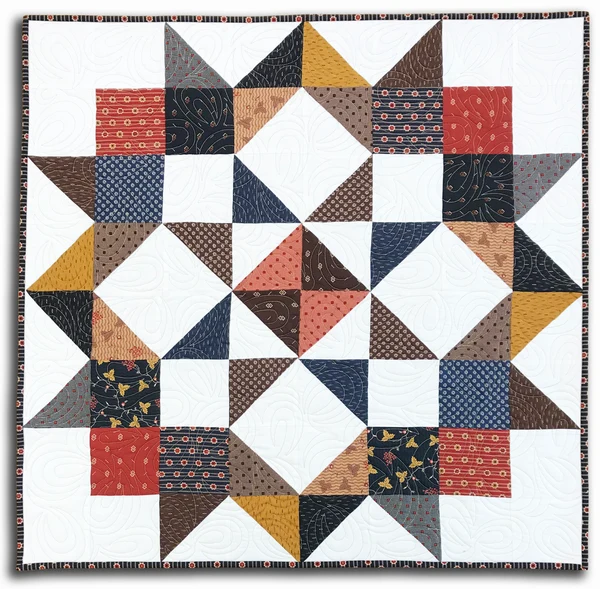
Choosing fabrics is one of the most enjoyable parts of quilting. Begin with a print that you would love to see in the finished quilt, then use its colors to guide the rest of your selection.
A floral print might suggest soft pink, cream, and leafy green. A bold geometric fabric could inspire navy, warm white, and mustard yellow. Seasonal fabrics can also help you create a quilt for a particular celebration or time of year.
Before committing to a palette, consider where the quilt will be used. A sofa throw might echo the colors in your living room, while a gift quilt can reflect the recipient’s favorite shades. These small choices give the project a personal connection.
Create Contrast That Supports the Design
Beautiful fabrics do not always create a clear patchwork design when placed together. Contrast matters, especially when a pattern depends on distinct shapes or repeated units.
Lay your fabrics side by side and look at their values—their relative lightness and darkness. Include enough variation for the important parts of the pattern to remain visible. A black-and-white photograph of your selection can help reveal fabrics that look different in color but similar in value.
Balance busy prints with quieter fabrics. Solids and subtle textures can provide a place for the eye to rest, allowing favorite prints to stand out without overwhelming the arrangement.
Check the Pattern Before Choosing Precuts
If you would like to work with precut fabrics, first check whether the featured PDF is designed for them. Different projects require different piece sizes, quantities, and combinations of prints.
Do not assume that one package will provide everything you need. The pattern may also require background yardage, borders, binding, or additional fabric for specific units.
Compare the cutting list with the fabrics you have available before beginning. This is especially helpful when substituting fabrics from your stash or combining several collections.
Gather Your Quilting Supplies
Use the PDF’s materials list to confirm the quantities for your chosen quilt size. General supplies may include:
- Quilting cotton for the quilt top.
- Background or border fabric, if required.
- Backing fabric, batting, and binding fabric.
- A rotary cutter, cutting mat, and quilting ruler.
- A sewing machine and suitable thread.
- Pins or clips, scissors, and a seam ripper.
- An iron and pressing surface.
- Supplies for basting and quilting.
Keep the pattern nearby as you organize your materials. Check the finished size, any required templates, and the suggested skill level before starting.
Cut and Label Your Pieces Carefully
Read through the entire pattern before cutting. Identify which fabrics belong in each part of the quilt, and pay attention to directional prints that may need a particular orientation.
Press your fabric smooth and follow the cutting dimensions exactly. Label similar pieces so you can distinguish them easily during assembly. Small containers or resealable bags can help keep units together.
If the pattern introduces an unfamiliar technique, make one practice unit first. Checking its size and appearance before sewing a larger batch can save both fabric and time.
Build Accuracy into Your Piecing
Follow the seam allowance stated in the PDF. If the pattern uses a quarter-inch seam, test your machine setup with scrap fabric and measure the sewn result before working on the quilt.
Check the first completed unit against the pattern’s unfinished dimensions. An accurate starting unit makes later assembly easier, particularly when several seams meet.
Press as directed, handling the pieces gently to avoid stretching. Working in manageable groups can make a repetitive project feel more comfortable while giving you regular opportunities to check your progress.
Plan the Layout Before Joining Sections
Arrange the pieces or blocks according to the pattern’s diagram before joining the quilt top. Step back to check the distribution of colors and prints, making changes only where the design allows.
Photograph the arrangement and label rows or sections before moving them. This simple habit can help prevent accidental rotations or misplaced blocks.
As you assemble the top, check intersections and orientation frequently. Correcting one misplaced unit is much easier before it becomes part of a larger section.
Finish with Quilting and Binding
Choose quilting that complements the patchwork and suits your equipment and experience. Straight lines can add a simple texture, while curves or a meander can soften the overall appearance.
Follow the batting manufacturer’s recommended maximum spacing between quilting lines. Test your thread, tension, and stitch settings on a small sample sandwich before quilting the project.
For binding, repeat a color from the quilt top or choose a contrasting fabric to frame the edges. Add a label with the date and a personal message if the quilt is a gift.
Download the Free Moda Quilt Pattern PDF
Ready to start sewing? Download the free Moda quilt pattern PDF below and use it as your reference throughout the project.
Read the complete instructions before cutting, and follow the PDF’s fabric requirements, measurements, diagrams, and assembly sequence. Keep the designer and pattern credits included in the download.
A Moda quilt pattern offers a starting point for a project shaped by your own fabric choices and careful sewing. Whether you prefer soft florals, bold contrasts, or a palette inspired by your home, the pleasure comes from watching separate pieces become a quilt you can use and enjoy.
Take your time, check your work as you go, and enjoy the small milestones along the way. From the first cut to the final binding stitch, each stage contributes to something personal and lasting.